
AT&T Stadium Information
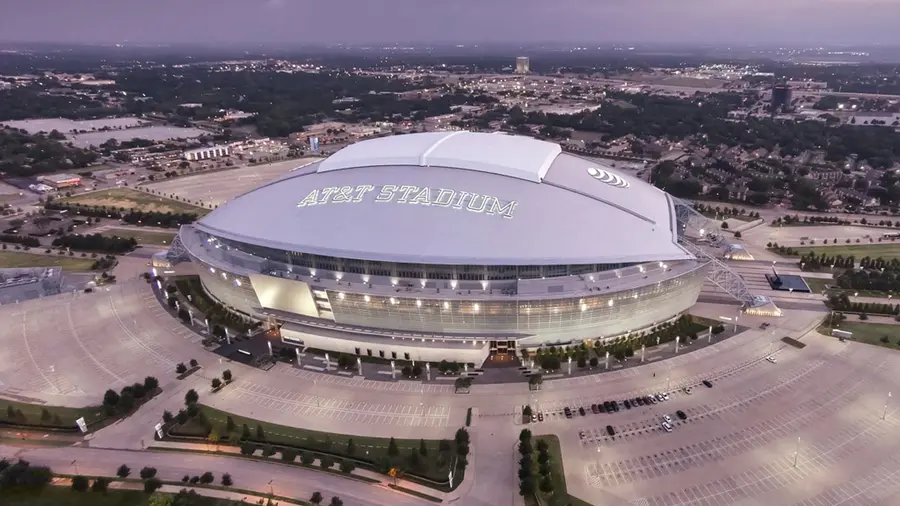
Previously known as the Cowboys Stadium, the AT&T Stadium is one of the most well-known stadiums in Texas, United States. Featuring a retractible roof, it is the home of the Dallas Cowboys of the National Football League (NFL) (replacing the Texas Stadium, the Cowboys’ home from 1971 to 2008) as well as the Cotton Bowl Classic.
The stadium’s most notable feature is its pair of massive arches, anchored at each end, that span across the entirety of the stadium dome. The AT&T Stadium cost $1.15 billion to construct, making it one of the most expensive sports venues ever built. In addition, the stadium boasts a seating capacity of 80,000, tying it with the Los Angeles Memorial Coliseum for the title of fifth largest auditorium in the NFL!! The stadium’s size makes it the perfect location for just about any event from concerts, to basketball games, to Spartan races!
Your Gateway to World-Class Entertainment
AT&T Stadium stands as Arlington’s crown jewel in the entertainment district, welcoming millions of visitors annually who come to experience premium seating options, state-of-the-art acoustics, and amenities that set new standards for sports arenas nationwide. You can explore stadium tours that take you behind the scenes, discover event scheduling for upcoming concerts and games, and enjoy guest services designed to make every visit memorable. The facility features innovations like the largest center-hung HD video display in professional sports and architectural elements that inspire awe from the moment you arrive.
About This Iconic Venue
AT&T Stadium has earned its reputation as one of the most technologically advanced and visually stunning venues in the world. The stadium opened its doors in 2009 with a mission to redefine what fans could expect from a sports and entertainment facility. You’ll discover that this isn’t just a place to watch events; it’s a destination that transforms how you experience live entertainment.
The venue spans 3 million square feet and features twin monumental steel arches rising nearly 300 feet. These arches support the retractable roof, which opens and closes to accommodate various weather conditions and event requirements. When you look up, you’ll see the massive center-hung HD video board stretching from the 20-yard line to the 20-yard line, measuring around 160 feet wide and 72 feet tall. This technological marvel ensures you never miss a moment of the action, regardless of where you sit.
AT&T Stadium is home to the Dallas Cowboys and regularly hosts a diverse array of events beyond NFL games. You can attend college football matchups, including the annual Cotton Bowl Classic and Big 12 Championship Game. The venue has hosted:
- International soccer matches
- Championship boxing bouts featuring legends like Manny Pacquiao
- Massive concerts from artists ranging from Taylor Swift to Metallica
- Basketball games, including the 2010 NBA All-Star Game
The stadium’s amenities cater to every type of fan and budget. You’ll find club-level seating with cushioned chairs and exclusive lounge access, luxury suites offering privacy and premium catering, and general admission sections that provide excellent sightlines at affordable prices.
Concession stands throughout the venue serve everything from classic stadium fare like hot dogs and nachos to Texas-inspired cuisine, including brisket sandwiches and Tex-Mex favorites. The Cowboys Pro Shop allows you to purchase official merchandise, while multiple bars and restaurants ensure you can grab refreshments without missing the action.
Guest services at AT&T Stadium prioritize your comfort and convenience. The facility features nursing rooms for mothers, sensory rooms designed for guests who need a calm environment, and accessible accommodations throughout the venue.
Staff members stationed at Guest Services Centers behind Sections 219, 244, 420, and 451 answer general questions, provide Lost and Found services, and help with any concerns that arise during your visit. You can also contact the Guest Services Hotline at (817) 892-4161 for immediate assistance.
The History Behind the Legend
The story of AT&T Stadium began with Dallas Cowboys owner Jerry Jones, who wanted a venue that would exceed traditional stadium design and serve as a major destination. In the early 1990s, Jones realized that Texas Stadium no longer met modern expectations. He soon started exploring options for building an entirely new facility.
By 2004, Jones had committed to the project and evaluated several locations across the Dallas–Fort Worth region. After considering multiple cities, Arlington became the top choice after voters approved a public financing package capped at $325 million. The funding came through increases to the local sales tax, hotel occupancy tax, and car rental tax.
Construction began in 2005 with HKS Architects leading the design effort. The plan introduced innovations such as a retractable roof, enormous glass end-zone doors, and flexible interior space. These features allowed the stadium to support a wide variety of events.
Engineers installed deep foundation structures during early construction, although reported depths vary. The stadium has retractable glass doors measuring 180 feet tall by 120 feet wide, which open in about 18 minutes and close in about 12 minutes. It also features an extensive technology backbone, including about 250 miles of fiber-optic cable.
The project’s initial estimate was $650 million, but the final cost reached roughly $1.15 billion. AT&T Stadium officially opened to the public on May 27, 2009. Its first big event was a George Strait concert on June 6 that attracted more than 60,000 fans.
The Cowboys played their first regular-season game there on September 20, 2009, against the New York Giants. The stadium was named “Cowboys Stadium” before being renamed “AT&T Stadium” on July 25, 2013. A long-term agreement with AT&T secured the naming rights.
AT&T Stadium has hosted many events, including Super Bowl XLV in 2011. In 2014, George Strait held a farewell concert that drew more than 100,000 attendees, setting a record for a single-headliner event. The stadium will also be one of the host locations for the 2026 FIFA World Cup.